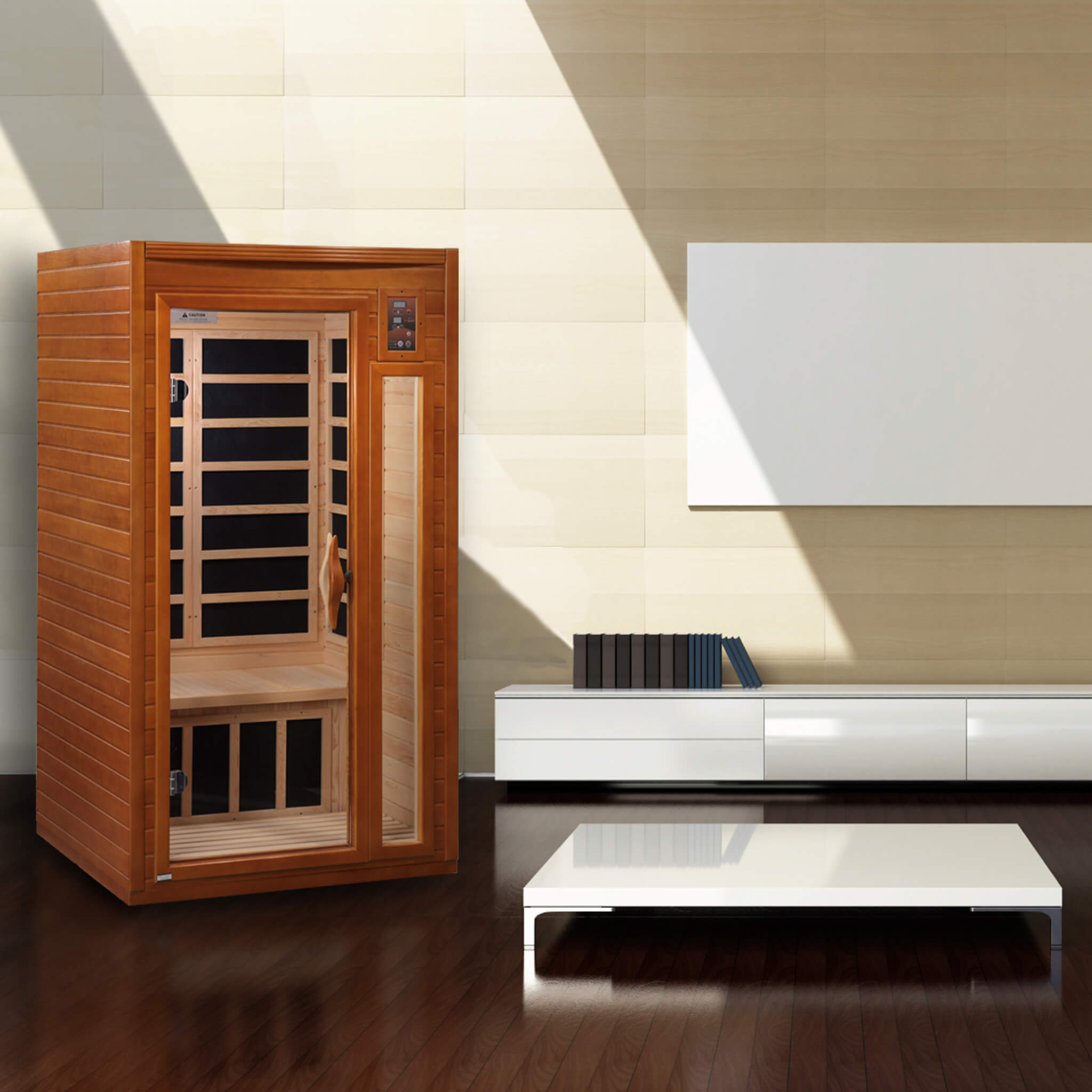
Is a Home Infrared Sauna Worth It? What to Expect Before You Buy (2026)
TL;DR
- A home infrared sauna is not the same as a traditional steam sauna and understanding that difference is what determines whether it is worth it for you
- Infrared saunas heat your body directly rather than heating the air around you, which allows them to operate at lower, more comfortable temperatures
- The reported benefits are well documented across decades of research but results depend on consistent use, not occasional sessions
- A quality 1 to 2 person model starts at an accessible price point, runs on a standard household outlet, and requires no professional installation
- This guide covers what infrared saunas actually do, what the research says, what they do not do, and how to decide if one belongs in your home
Direct Answer: Is a Home Infrared Sauna Worth It?
For buyers who will use it consistently, have the space for it, and understand what it does and does not do, a home infrared sauna is a genuinely useful addition to a wellness routine. For buyers who expect dramatic results from occasional use or are looking for a medical treatment, it is not. The honest answer depends entirely on your expectations going in. This guide is designed to help you set those expectations accurately before you spend a dollar.
What an Infrared Sauna Actually Does (And How It Is Different From What You Are Imagining)
Most people picture a traditional Finnish sauna when they think of a home sauna. Wooden benches, hot rocks, steam, and temperatures that feel unbearable after five minutes. That is not what an infrared sauna is.
An infrared sauna uses carbon heating panels to emit far infrared wavelengths, which fall in the 5.6 to 1,000 micron range of the light spectrum. These wavelengths penetrate organic material including the human body at a depth of approximately 2 to 3 inches. The result is that your body warms from the inside out through a process called conversion rather than from the outside in through heated air.
Because the heat goes directly into your body rather than the air around you, an infrared sauna reaches the same therapeutic sweating effect at temperatures between 118 and 140 degrees Fahrenheit. A traditional steam sauna needs to reach 170 to 200 degrees Fahrenheit to produce the same result. That temperature difference is significant. Most people find infrared sessions more comfortable, easier to breathe in, and accessible for longer periods of time.
If you have ever sat in a traditional sauna and found the heat overwhelming, an infrared sauna is a fundamentally different experience. If you have never tried either, the infrared version is a gentler starting point.
What Does the Research Actually Say?
This is where we want to be straightforward with you. The reported benefits of infrared sauna use are based on research conducted over the past 40 years across multiple countries and clinical settings. The research is real and it is growing. But it is important to understand what that research shows and what it does not.
Infrared sauna use is not a medical treatment and should not be approached as one. The products on this page are wellness products, not medical devices. If you have a medical condition, are taking medication, are pregnant, or have any health concerns, speak with your doctor before using an infrared sauna.
With that context clearly stated, here is what the research consistently reports across decades of use in wellness and recovery settings:
Relaxation and stress reduction. The most consistently reported benefit across user experience and research is a reduction in perceived stress and an improvement in relaxation following infrared sauna sessions. The combination of heat, quiet, and time away from screens creates conditions that most people find genuinely restorative.
Muscle recovery. Infrared sauna use is widely reported in athletic and recovery contexts as supportive of muscle recovery following exercise. The deep heat penetration is the mechanism most commonly cited. This is one of the most well documented applications in wellness literature.
Circulation. Heat exposure in general is associated with increased heart rate and improved blood flow. Infrared sauna sessions produce a cardiovascular response similar to moderate physical activity according to research cited in wellness literature. This is reported consistently across studies but should not be interpreted as a replacement for exercise.
Skin health. The perspiration process during an infrared session opens pores and encourages the skin to shed waste products. Improved skin tone, texture, and clarity are among the most commonly reported cosmetic benefits of consistent use.
Sleep quality. Many regular infrared sauna users report improved sleep quality, particularly when sessions are completed in the evening. The relaxation response combined with the body's natural cooling process after a session is the commonly cited mechanism.
What the research does not show is that any of these benefits are guaranteed, immediate, or permanent without continued use. Results are reported with consistent use over time, typically multiple sessions per week across several weeks. One session will not produce measurable results. A consistent routine over time is what the research and user experience consistently support.
What a Home Infrared Sauna Will Not Do
Being direct about this is important because wellness marketing often overpromises.
A home infrared sauna will not replace medical treatment for any condition. It will not produce dramatic results from occasional use. It will not work if it sits unused in the corner of a room. And it will not feel like a traditional steam sauna because it is not one.
If you are purchasing one with the expectation that it will resolve a specific health condition, speak with your doctor first. The products on this page are wellness products designed to support a healthy lifestyle, not treat or cure anything.
Who a Home Infrared Sauna Is Actually Right For
Based on what the research reports and what consistent users describe, a home infrared sauna tends to be a genuinely good fit for the following:
People who want a dedicated daily recovery and relaxation practice at home. The convenience of having a sauna in your own space removes the barrier of driving to a spa or gym. For people who would use it regularly, that convenience is the single biggest factor in getting value from the purchase.
People who find traditional saunas too intense. The lower operating temperature of infrared makes it accessible to people who cannot tolerate the extreme heat of a traditional sauna.
People who work out regularly and want a structured recovery tool. Infrared sauna use in post-workout recovery contexts is one of the most consistently reported applications in wellness literature.
People who want a private wellness space without a major home renovation. A 1 to 2 person infrared sauna runs on a standard 120V household outlet, assembles without tools beyond a screwdriver, and fits in a spare bedroom, basement, or home gym corner. No construction, no contractor, no electrician.
What to Look for Before You Buy
If you have decided a home infrared sauna makes sense for your lifestyle, here is what actually matters when comparing models:
Heater type. Carbon panel heaters distribute heat more evenly than ceramic rod heaters and are the standard in quality home infrared saunas. Look for FAR infrared carbon panels specifically.
Wood construction. The interior wood absorbs heat, moisture, and sweat over hundreds of sessions. Kiln-dried, untreated wood that does not off-gas chemicals is important. Canadian Hemlock is the industry standard in quality home saunas at accessible price points.
EMF levels. Every electrical appliance produces some electromagnetic field. For a sauna you sit inside for extended periods, knowing the EMF level matters. Look for verified Low EMF ratings and understand what tier you are buying. Standard Low EMF carbon panel saunas measure 5 to 10 milligauss at 2 to 3 inches from the panel. Ultra Low EMF models measure 3 to 5 milligauss. Both are well below common household appliances at close range.
Electrical requirements. A quality 1 to 2 person infrared sauna should run on a standard 120V/15amp household outlet with no dedicated circuit required. If a model requires 240V wiring it is not plug-and-play and installation costs increase significantly.
Capacity. A 1 to 2 person model is the right starting point for most home buyers. If two people will use it together regularly, look specifically for a model described as a true 2-person unit with interior dimensions wide enough for two adults to sit side by side.
Warranty. A quality infrared sauna should carry at minimum a 5-year warranty on heating elements and electronics for residential use.
How to Know If You Will Actually Use It
This is the most honest question to ask before buying. A home infrared sauna is only worth the investment if you will use it consistently.
Ask yourself these questions before purchasing:
Do you already have a consistent wellness or recovery routine that a sauna would fit into naturally? Or are you hoping the sauna will create that routine for you?
Do you have a dedicated space for it that is dry, level, has a standard non-GFCI outlet nearby, and is accessible for delivery?
Are you prepared to use it multiple times per week for several weeks before evaluating whether it is working for you?
If the answers are yes, the research and the experience of consistent users suggest you will get genuine value from a home infrared sauna. If the answers are uncertain, it is worth thinking through before committing.
The Dynamic Infrared Saunas at Luxury Wellness Store
If you have read this far and decided a home infrared sauna is the right fit, the three models available at Luxury Wellness Store are a strong starting point in the accessible price range of the market.
All three are FAR infrared carbon panel saunas built with natural reforested Canadian Hemlock, verified Low EMF at 5 to 10 milligauss, 120V plug-and-play electrical, and a 5-year residential warranty on heating elements and electronics. All three ship free to the continental United States.
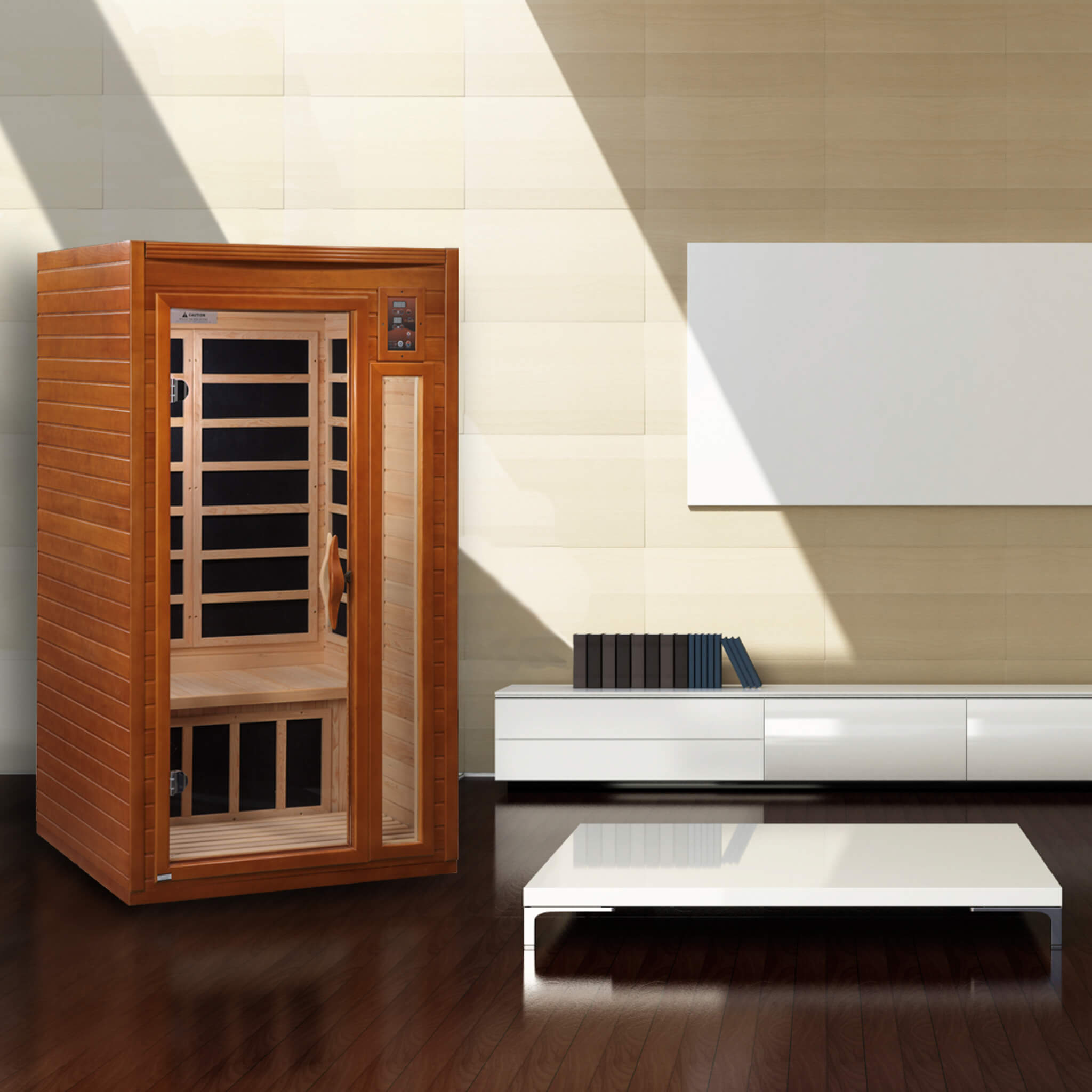
The Dynamic Gracia is a 1 to 2 person model with 7 carbon panels in a compact footprint, well suited for solo users or couples who will use it one at a time. Shop the Dynamic Gracia
The Dynamic Barcelona is the most compact model in the lineup with 6 panels, ships in a single box, and is ideal for dedicated solo users or spaces with limited access. Shop the Dynamic Barcelona
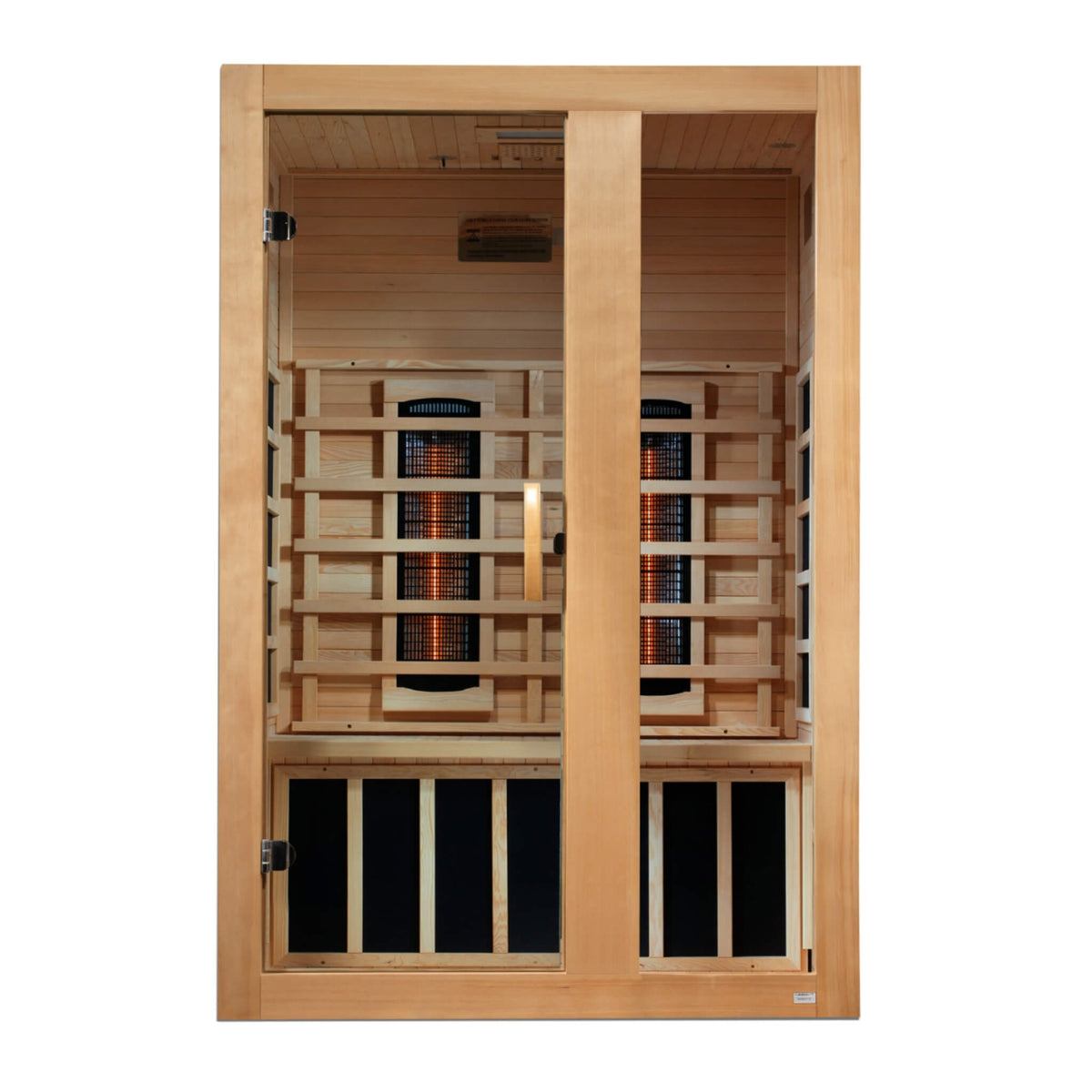
The Dynamic Santiago is the only true 2-person model with a significantly wider interior, designed for two adults to use together comfortably. Shop the Dynamic Santiago
For a full breakdown of the specifications, dimensions, electrical requirements, and a side by side comparison of all three models, read our complete guide: Best Plug-and-Play Home Infrared Sauna (2026)
Frequently Asked Questions
Is an infrared sauna the same as a traditional sauna?
No. A traditional sauna heats the air around you to temperatures between 170 and 200 degrees Fahrenheit. An infrared sauna uses carbon heating panels to warm your body directly through radiant heat at temperatures between 118 and 140 degrees Fahrenheit. The experience is significantly different and most people find infrared more comfortable for longer sessions.
How often do you need to use an infrared sauna to see results?
The research and user experience consistently point to multiple sessions per week over several weeks as the baseline for noticing reported benefits. Occasional use is unlikely to produce measurable results. Consistency is the deciding factor.
Can anyone use an infrared sauna?
Not without checking first if you have any health concerns. If you have a medical condition, are taking medication, are pregnant, or have any health concerns, speak with your doctor before using an infrared sauna. Infrared saunas are wellness products, not medical devices, and are not appropriate for everyone without professional guidance.
Do home infrared saunas require an electrician to install?
A quality 1 to 2 person infrared sauna runs on a standard 120V/15amp household outlet and requires no electrician, no dedicated circuit, and no permits. The one detail to confirm is that the outlet is not GFCI protected. A standard bedroom or basement outlet works perfectly.
How long does an infrared sauna session last?
Most users start with 15 to 20 minute sessions and work up to 30 to 45 minutes as they become comfortable with the heat. The Dynamic models allow sessions up to 90 minutes with a one hour cool down required after every 3 hours of continuous use per the owner's manual.
What is Low EMF on an infrared sauna?
EMF stands for electromagnetic field. Every electrical appliance produces some level of EMF. For a sauna you sit inside for extended periods, the EMF level at the distance your body sits from the heating panels is what matters. Standard Low EMF infrared saunas measure 5 to 10 milligauss at 2 to 3 inches from the panel. Ultra Low EMF models measure 3 to 5 milligauss. Both are well below the EMF output of common household appliances at close range.
Where can I put a home infrared sauna?
Any dry, level indoor space with a standard non-GFCI 15amp outlet within reach works. Common placements include spare bedrooms, basements, home gyms, and walk-in closet areas. These are indoor-only units and cannot be placed outdoors.
The information in this post is for educational purposes only and is not medical advice. Speak with your doctor before using an infrared sauna if you have any health concerns.