Best Red Light Therapy Beds (2026): How to Choose the Right System for Your Facility
TL;DR
The best red light therapy bed in 2026 depends on your facility type, available space, and how you plan to use it daily. Full-body systems are most common in wellness centers, while compact and multi-function systems are used in smaller or flexible environments. The right choice is based on fit, not features alone.
Direct Answer
There is no single “best” red light therapy bed for every wellness center.
The best system is the one that aligns with:
- your space and layout
- your expected client volume
- your service model (premium vs. entry-level)
- how easily it fits into daily operations
Most facilities choose between full-body beds, enclosed pod-style systems, or compact multi-function systems depending on how they plan to deliver sessions.
What “Best” Actually Means in 2026
When people search for the best red light therapy bed, they are usually trying to compare systems that look similar but perform differently in real environments.
In practice, “best” is not defined by specifications alone.
It is defined by:
- consistency of use
- ease of operation
- client experience
- how well the system integrates into the facility
A system that is difficult to use, takes too long to manage, or does not fit the space will not perform well, regardless of features.
Main Types of Red Light Therapy Systems
Understanding the main categories is the first step toward choosing the right system.
Full-Body Red Light Therapy Beds
These are the most widely used systems in professional environments.
They provide:
- full-body exposure in a single session
- consistent positioning for every user
- structured, repeatable sessions
- simple operation for staff
They are typically used in:
- wellness centers
- recovery studios
- performance-focused facilities
- spa environments
These systems are often chosen when consistency and efficiency are priorities.
You can explore available full-body systems here
Enclosed Pod-Style Systems
These systems are designed to surround the user more completely.
They are commonly used in:
- premium wellness environments
- private treatment rooms
- facilities focused on experience and positioning
They provide:
- a more immersive session
- consistent exposure
- strong visual appeal for clients
These systems are often selected when the goal is to create a high-end service offering.
Compact or Multi-Function Systems
These systems are used when flexibility or space is limited.
They are typically found in:
- boutique studios
- smaller wellness spaces
- multi-use environments
They allow facilities to:
- offer light therapy without a large footprint
- combine multiple functions into one system
- integrate easily into existing layouts
Best Red Light Therapy Systems by Use Case
The most effective way to choose a system is by use case, not by brand lists.
Best for High-End Wellness Centers
Facilities focused on premium services typically choose systems that provide:
- full-body coverage
- comfortable positioning
- consistent session experience
These systems are used as core services and are designed for:
- repeat usage
- long-term installation
- structured service offerings
They are often positioned as a flagship feature within the facility.
Best for Performance and Recovery Facilities
Recovery-focused environments prioritize:
- repeatable sessions
- ease of use
- integration with other recovery tools
These systems are used alongside:
- cryotherapy
- compression therapy
- mobility and recovery zones
The goal is operational simplicity and consistent use, not complexity.
Best for Space-Limited Studios
When space is limited, choosing a large system is not always practical.
Facilities in this category look for systems that:
- fit comfortably within the available footprint
- are easy to operate
- still provide meaningful coverage
This allows studios to offer light therapy without restructuring the entire space.
Best for Multi-Service Wellness Environments
Some systems are selected for flexibility rather than specialization.
These systems:
- combine multiple features
- support a variety of services
- reduce the need for multiple machines
They are often used in:
- wellness lounges
- boutique studios
- hybrid recovery environments
Comparison: How Buyers Evaluate Systems in 2026
This is where most decisions are actually made.
Buyers compare systems based on practical factors, not just specifications.
| Factor | What It Means in Practice |
|---|---|
| Coverage | Full-body vs. partial exposure |
| Size | Whether it fits the room and layout |
| Workflow | How easily staff can manage sessions |
| Client Experience | Comfort, positioning, ease of use |
| Positioning | Entry-level vs. premium service offering |
| Usage Frequency | Occasional use vs. daily high-volume use |
Key Differences Between Entry, Mid, and Premium Systems
This is where many buyers get clarity.
Entry-Level Commercial Systems
- smaller footprint
- simpler design
- lower initial investment
- suitable for adding light therapy as an additional service
Best for:
- new studios
- testing demand
- smaller facilities
Mid-Tier Systems
- balanced size and performance
- consistent full-body coverage
- reliable daily operation
Best for:
- established wellness centers
- facilities expanding services
- moderate client volume
Premium Systems
- large, fully integrated designs
- enhanced client experience
- built for high-frequency use
Best for:
- high-end wellness centers
- performance facilities
- studios positioning themselves at the top of the market
Compare Red Light Therapy Beds by Model
Frameworks are useful, but at some point you want to see actual systems side by side. Here's how five real full-body and pod-style options compare.
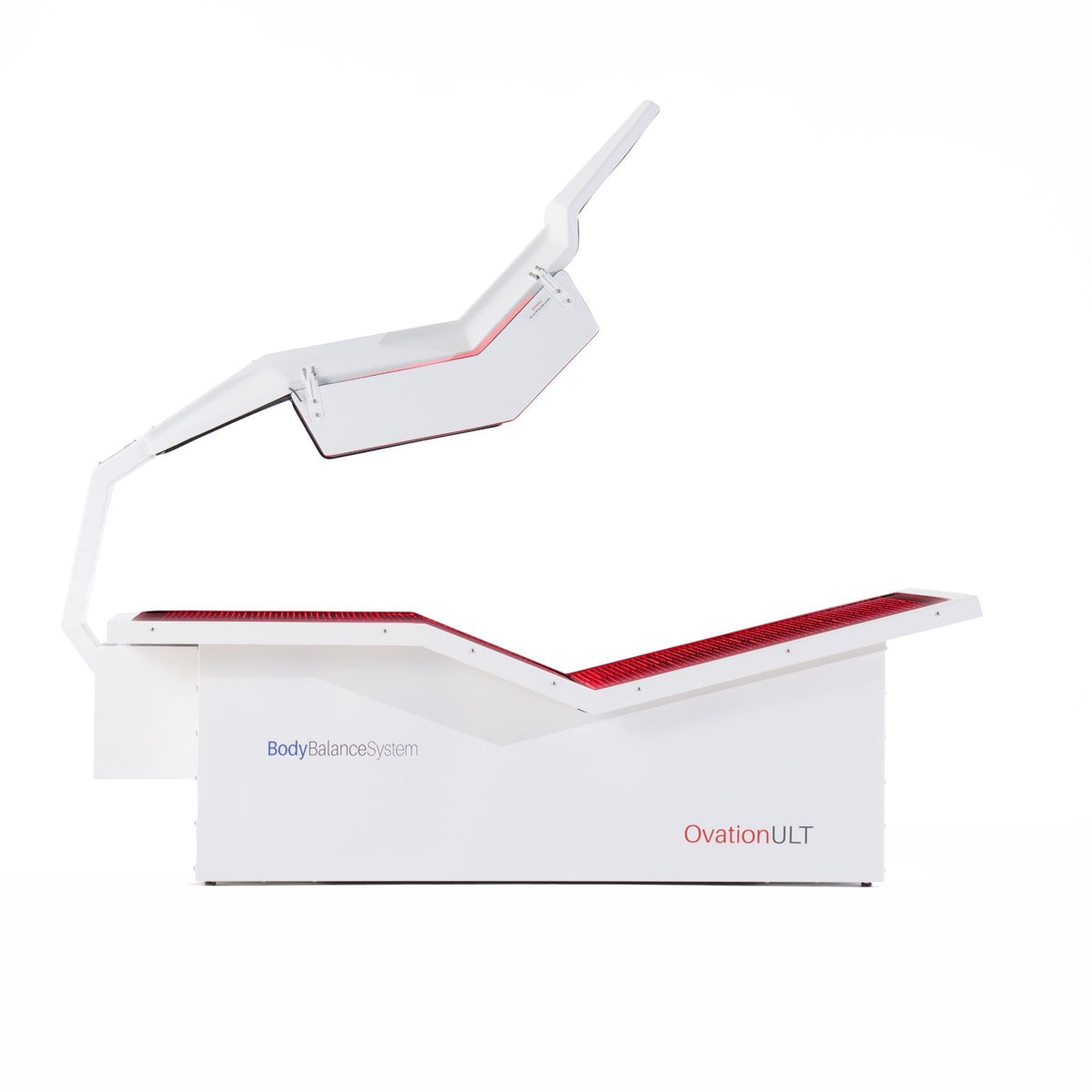
Our recommended pick for most facilities is the Body Balance System OvationULT. It's a full-body, zero gravity system that positions users 2 to 3 inches from the light source, the same close-proximity principle the flagship systems use, at a more accessible investment point than the larger PremierRLT or Prism Light Pod. For a facility that wants the comfort and coverage of a true zero gravity system without stepping up to flagship pricing, this is where we'd start.
| Model | Type | Price Tier | Best For |
|---|---|---|---|
| Body Balance System OvationULT | Full-body, zero gravity | Our Recommended Pick, See current pricing | Facilities wanting the comfort of a true zero gravity, full-body system at our most accessible mid-tier investment point |
| Dr. Fuji FJ-20061 | Full-body, standard positioning | Mid tier, See current pricing | Clinics, med spas, and serious home installations wanting tablet and Bluetooth app control over four wavelengths |
| Body Balance System PremierRLT | Full-body, zero gravity, larger format | Flagship tier, See current pricing | Wellness centers wanting our largest and most premium zero gravity system |
| Prism Light Pod | Enclosed pod | Premium tier, See current pricing | Premium, high-end environments prioritizing an immersive, fully enclosed session experience |
| Cryonick InfraCouch | Full-body with vibration massage | Entry tier, See current pricing | Facilities entering full-body red light therapy at a lower initial investment |
If you want the zero gravity experience without stepping up to flagship pricing, the OvationULT is our starting recommendation. If you're comparing entry points, the InfraCouch currently sits at the lowest starting price in this group. If tablet and app-based control over multiple wavelengths matters more to you than zero gravity positioning, the FJ-20061 is worth a look. If you're building a flagship premium offering, the PremierRLT and Prism Light Pod are built for that positioning.
Which System Should You Choose?
Use this framework to simplify the decision:
- Choose the OvationULT if you want a true zero gravity, full-body system as your default starting point
- Choose a full-body bed like the FJ-20061 if tablet/app control and multiple wavelengths matter more than zero gravity positioning
- Choose a pod-style system if you prioritize premium experience
- Choose a compact system if space is limited
- Choose a multi-function system if flexibility is important
The best system is the one that will be used consistently, not the one with the most features.
Where Red Light Therapy Fits in a Facility
Most facilities do not use red light therapy in isolation.
It is typically part of a broader system that may include:
- cryotherapy
- compression therapy
- recovery zones
If you are planning a full setup, this guide explains how everything connects
Key Takeaways
- There is no single best red light therapy bed for every facility
- The right system depends on space, workflow, and usage
- Full-body systems are the most common in professional environments
- Practical factors matter more than technical specifications
- Choosing based on real use leads to better long-term results
Frequently Asked Questions
What is the best red light therapy bed for a wellness center?
The best system depends on your space, client volume, and service model. Most facilities choose full-body systems for consistency and ease of use.
Are full-body beds better than panels?
Full-body beds provide consistent exposure in one session, while panels are typically used for targeted applications.
What's the difference between a full-body bed and a pod-style system?
A pod-style system, like the Prism Light Pod, fully encloses you in a flat, horizontal format, similar to a tanning bed. The OvationULT and PremierRLT use a zero gravity, reclined position instead, which takes pressure off the body and makes longer sessions more comfortable. The FJ-20061 uses a standard flat positioning with tablet and app control instead of zero gravity. The right choice comes down to whether your facility prioritizes the enclosed, immersive feel of a pod, the comfort of a reclined position, or direct control over wavelength and session settings.
How long are sessions typically?
Sessions are designed to be structured and consistent, allowing them to fit easily into a client’s visit.
Do all systems require large space?
No. Some systems are specifically designed for compact or multi-use environments.
How do facilities choose the right system?
They match the system to their layout, workflow, and service model rather than choosing based on features alone.
Final Thoughts
Most “best red light therapy bed” comparisons focus on features, but real-world decisions are made differently.
The best system is the one that:
- fits your space
- works within your daily operations
- supports consistent use
- aligns with your positioning
When those factors are clear, the decision becomes straightforward and much more effective over time.
Next Step
If you are comparing options, you can review available systems here