Home Hyperbaric Chamber Buyer’s Guide 2026 (Costs, Setup, Is It Worth It?)
TL;DR
Home hyperbaric chambers provide pressurized oxygen sessions that support wellness routines, recovery programs, and proactive health strategies. They are best suited for people who plan consistent long-term use and want private access at home instead of paying for repeated clinic visits.
Yes. A home hyperbaric chamber can be a worthwhile investment if you plan to use it regularly, want convenient access to sessions, and prefer owning equipment instead of scheduling ongoing clinic treatments.
These systems are designed for consistent wellness use, not occasional experimentation. The value comes from long-term routine use.
Best Home Hyperbaric Chamber in 2026: What Actually Matters
If you are searching for the best home hyperbaric chamber in 2026, here is the truth: “best” depends on how often you will use it, how much space you have, and how comfortable you need it to be.
Most home buyers choose a mild hyperbaric chamber for consistent wellness routines. These are typically used as part of a long-term plan, not a one-time experiment. If you plan to use a chamber only once in a while, it is hard to justify the cost. If you plan to use it several times per week, comfort and fit start to matter a lot.
Here are the 3 factors that make the biggest difference:
1) Chamber size and comfort
Smaller chambers cost less, but they can feel tight. Many people use larger diameters because it is easier to relax and stay consistent.
2) Your space and setup reality
You need enough room for the chamber plus nearby equipment. If space is tight, you may need a smaller footprint or a vertical style.
3) Your routine and consistency
The value comes from regular use over time. The right model is the one you will actually use.
This guide will help you match the chamber style and size to your goals, space, and budget so you can make a confident decision.
Home Hyperbaric Chambers Are Moving Into Mainstream Wellness
Hyperbaric oxygen therapy was once limited to hospitals and specialized clinics. Today, mild hyperbaric chambers are becoming a permanent fixture in high-end home wellness environments, recovery spaces, and performance-focused lifestyles.
Health-conscious individuals are building complete wellness routines at home. Recovery tools, advanced monitoring, and structured daily protocols are replacing occasional treatments. Hyperbaric chambers are now part of that shift toward proactive, long-term wellness planning.
For many buyers, the decision is no longer about trying hyperbaric sessions. It is about whether ownership makes more sense than paying for repeated appointments.
This Guide Helps You Make a Smart Investment Decision
A home hyperbaric chamber is a serious purchase. Most systems range from about $8,000 to over $20,000, and choosing the wrong model can lead to frustration, underuse, or unnecessary expense.
This guide explains:
- how home hyperbaric chambers work
- what features actually matter
- real cost expectations
- space and setup requirements
- who benefits most from ownership
- how to choose the right system confidently
Everything here is designed to help you evaluate whether ownership fits your goals, budget, and long-term wellness plans.
Before You Go Further
If you are considering a home hyperbaric chamber, think of this guide as a decision framework, not a sales pitch. The goal is simple:
Help you understand what ownership really involves so you can make a confident, informed choice.
Now let’s start with why hyperbaric chambers are gaining so much attention in 2026.
Why Hyperbaric Chambers Are Having a Moment in 2026
The hyperbaric oxygen therapy market is experiencing explosive growth. Recent market analysis shows the home hyperbaric chamber segment expanding at over 7% annually, with the global market projected to reach $8.2 billion by 2033. What's driving this surge?
The Perfect Storm of Wellness Trends:
Athletes and biohackers like LeBron James and longevity enthusiasts like Bryan Johnson have brought HBOT into mainstream consciousness. These high-profile users aren't just following a fad—they're part of a larger movement toward cellular health optimization and proactive wellness that's defining 2026.
The Shift to Cellular Health:
This year, wellness conversations have moved beyond surface-level fitness to focus on what's happening at the cellular level. Mitochondrial function, cellular repair, and tissue oxygenation are no longer just topics for research papers—they're driving consumer decisions about wellness investments.
Home Wellness Infrastructure:
The post-pandemic acceleration of home health solutions hasn't slowed down. People are building comprehensive wellness routines at home, and hyperbaric chambers are becoming the centerpiece of these personal health sanctuaries.
What Exactly Is Hyperbaric Oxygen Therapy?
Before we dive into specific chambers, let's establish a clear understanding of what HBOT actually does.
The Science Made Simple:
Hyperbaric oxygen therapy involves breathing concentrated oxygen in a pressurized environment. The chamber increases atmospheric pressure above normal sea level pressure (measured in ATA - atmospheres absolute). This combination of increased pressure and higher oxygen concentration allows more oxygen to dissolve directly into your blood plasma, beyond what your red blood cells can carry.
Think of it this way: under normal conditions, oxygen travels through your body primarily attached to red blood cells. When you're in a hyperbaric environment, oxygen dissolves directly into your plasma, cerebrospinal fluid, and lymphatic system. This allows oxygen to reach areas with restricted blood flow—injured tissues, inflamed areas, or regions with compromised circulation.
The Cellular Impact:
At the cellular level, this increased oxygen availability supports your mitochondria (the powerhouses of your cells) in producing ATP, the energy currency your body uses for virtually every biological process. Research has documented improvements in tissue repair, reduced inflammation, and enhanced cellular metabolism with hyperbaric oxygen exposure.
Critical Distinction:
The chambers we're discussing in this guide—mild hyperbaric chambers operating at 1.3-1.4 ATA—are primarily used for wellness applications, and are FDA cleared.
These chambers should not be used as a substitute for professional medical treatment.
What This Means for You:
- Consult with your healthcare provider before starting any hyperbaric oxygen therapy program
- Don't use HBOT to treat or diagnose any medical condition without physician oversight
- Understand that insurance typically doesn't cover wellness-focused HBOT use
- Research is ongoing for many wellness applications
The Wellness Application Landscape
There's substantial interest and emerging research in wellness-focused applications. Here's what people are exploring HBOT for:
Athletic Performance and Recovery:
Professional and amateur athletes are incorporating mild HBOT into their routines. The theory is that enhanced oxygen delivery may support faster muscle recovery, reduced inflammation after intense training, and potentially improved performance metrics. Research in this area continues to develop.
Cellular Health and Longevity:
The longevity optimization community has embraced HBOT as part of comprehensive health protocols. The focus is on supporting mitochondrial function, which naturally declines with age, and potentially promoting cellular repair processes.
Cognitive Function:
Some users report subjective improvements in mental clarity, focus, and cognitive performance after regular HBOT sessions. Studies exploring HBOT's effects on brain function in various contexts are ongoing.
Skin Health and Appearance:
Increased oxygen delivery to skin tissues may support collagen production and skin cell regeneration, though results vary significantly between individuals.
General Wellness:
Many users incorporate mild HBOT into their wellness routines for general health support, stress management, and overall vitality. These are highly individual experiences and not guaranteed outcomes.
Important Disclaimer: These wellness applications are not FDA-approved uses. While research is ongoing and user experiences vary, you should approach HBOT as a complementary wellness practice, not a medical treatment. Always consult healthcare professionals before beginning any new wellness protocol.
Types of Home Hyperbaric Chambers Explained
Now let's get practical. Home hyperbaric chambers come in several configurations, each with distinct characteristics, benefits, and price points.
Soft/Portable Chambers (1.3 ATA)
What They Are:
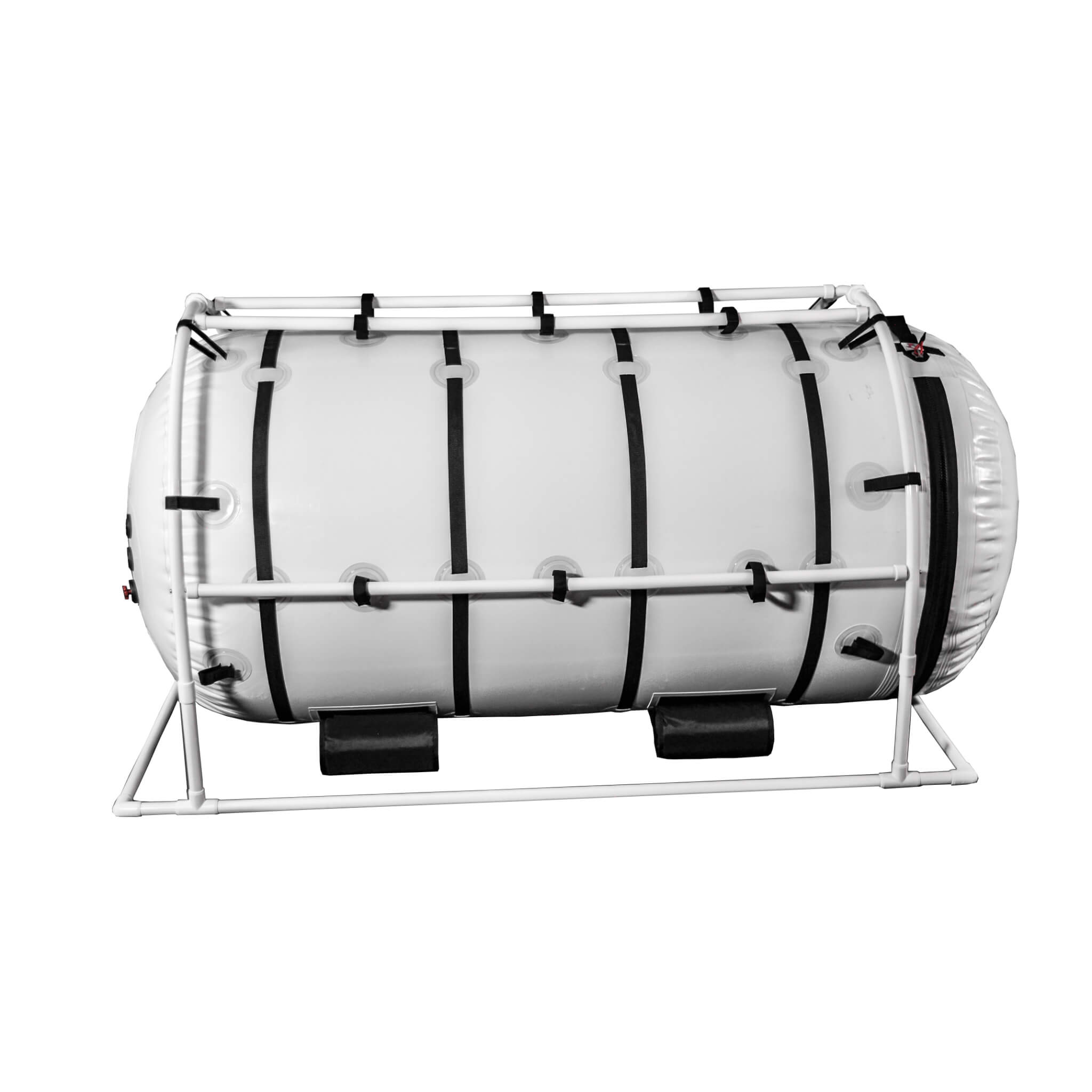
Soft chambers are constructed from durable fabric materials and use zippers for entry. They inflate with ambient air to reach operating pressure, typically 1.3 ATA. These are the most common type for home wellness use.
Typical Specifications:
- Pressure: 1.3 ATA (4.4 PSI above sea level)
- Diameter: 26" to 40"
- Length: 7' to 8.5'
- Oxygen delivery: Via mask or cannula from separate concentrator
- Setup: Portable, can be deflated for storage or moving
Best For:
- First-time users
- Those prioritizing portability
- Budget-conscious wellness enthusiasts
- Homes with space constraints
Considerations:
- Lower pressure than clinical HBOT (which uses 2.0-2.5 ATA)
- Requires oxygen concentrator for enhanced oxygen delivery
- Entry through zippered opening (requires flexibility)
- More affordable than hard-shell chambers
Price Range: $7,995 - $14,995
Vertical Chambers
What They Are:
Vertical chambers offer a standing entry configuration, making them significantly easier to get in and out of compared to horizontal soft chambers. They provide the same 1.3 ATA pressure environment but with enhanced accessibility.
Typical Specifications:
- Pressure: 1.3 ATA
- Interior height: 78" to 85"
- Diameter: 40" to 60"
- Standing entry with zippered door
- Floor space: 5' x 5' approximately
Best For:
- Users with mobility limitations
- Individuals who feel claustrophobic in horizontal chambers
- Multi-user households (easier for children and elderly)
- Those who plan to read or work during sessions
Considerations:
- Requires higher ceiling clearance
- Larger footprint than horizontal chambers
- Slightly higher price point
- Can sit comfortably inside on a chair or bench
Price Range: $13,995 - $17,995
Premium Large-Diameter Chambers (60")
What They Are:
These represent the top tier of home hyperbaric chambers—60-inch diameter units that provide maximum interior space and comfort. They approach clinical chamber comfort levels while remaining suitable for home use.
Typical Specifications:
- Pressure: 1.3-1.4 ATA
- Diameter: 60"
- Length: 6.5' to 8.5'
- Professional-grade construction
- Enhanced window visibility
- Multiple occupancy possible (parent + child)
Best For:
- Serious wellness investors
- Professional athletes
- Clinics and wellness centers
- Users prioritizing maximum comfort
- Those planning daily or multiple daily sessions
Considerations:
- Premium pricing
- Requires dedicated space
- Professional delivery and setup recommended
- Higher quality materials and construction
- Longer warranty periods typically included
Price Range: $20,195 - $21,995
Key Decision Factors: What Actually Matters
After working with hundreds of customers considering hyperbaric chambers, I've identified the factors that actually impact user satisfaction and results.
1. Pressure Capability (ATA Rating)
Understanding ATA:
ATA stands for "atmosphere absolute"—the measure of pressure in the chamber. Sea level is 1.0 ATA. Most home chambers operate at 1.3 ATA, which is 4.4 PSI above normal atmospheric pressure.
Why 1.3 ATA for Home Use:
This pressure level provides several advantages:
- Significantly lower risk of side effects compared to medical-grade HBOT (2.0-2.5 ATA)
- No risk of oxygen toxicity at these pressures
- Easier equalization for your ears
- Can be used daily without medical supervision (though physician consultation is still recommended)
- Supported by research for various wellness applications
Recent studies have shown that mild HBOT at 1.3 ATA with oxygen supplementation can produce measurable physiological changes, including improved oxygen saturation levels, reduced resting heart rate, and reported improvements in fatigue and recovery markers.
The Higher Pressure Myth:
More pressure isn't necessarily better for wellness applications. Medical-grade high-pressure HBOT (2.0+ ATA) is appropriate for acute medical conditions under physician supervision. For regular wellness use, 1.3 ATA provides oxygen enhancement while minimizing risks.
2. Chamber Diameter and Comfort
This is where personal preference becomes crucial. Chamber diameter dramatically affects your experience.
26-33" Chambers:
- Most affordable
- Compact storage
- Tight fit for most adults
- Best for shorter sessions (60 minutes or less)
- Can feel restrictive
40" Chambers:
- Sweet spot for most users
- Comfortable for average-height individuals
- Room to shift positions
- Good for 60-90 minute sessions
- Better for claustrophobia concerns
60" Chambers:
- Spacious and comfortable
- Can sit up or lie down
- Room for entertainment (tablet, reading)
- Suitable for extended sessions
- Multiple user sizes accommodated
- Significantly reduces claustrophobic concerns
Honest Assessment: If you're over 6' tall or over 200 lbs, or if you know you're sensitive to confined spaces, invest in a 40" minimum, preferably 60". The comfort difference is substantial, and it directly impacts whether you'll actually use the chamber consistently.
3. Portability vs. Permanent Installation
Portable Chambers (Soft-Sided):
Advantages:
- Can be deflated and moved
- Take with you when traveling (with some effort)
- Easier to store if needed
- Can reposition in your home
Disadvantages:
- Setup and breakdown each time (if you're deflating it)
- Less durable than hard-shell chambers
- Limited to 1.3-1.4 ATA pressure
Semi-Permanent Setup:
Most home users set up their soft chamber in a dedicated space and leave it inflated. This gives you:
- Immediate availability for daily sessions
- No setup time
- Protected space for the chamber
- Need to dedicate that floor space permanently
Practical Consideration: Think realistically about your space. A 60" x 8' chamber needs approximately 8' x 8' of floor space for safe operation. Add clearance for the compressor and oxygen concentrator. Most users end up dedicating a bedroom, office, or basement area.
4. Oxygen Delivery System
Critical Understanding:
The chamber itself creates pressure. To achieve the benefits associated with hyperbaric oxygen therapy, you need supplemental oxygen delivery. This typically comes from:
Oxygen Concentrators:
- Extract oxygen from ambient air
- Concentrate it to 90-96% purity
- Deliver via mask or cannula
- Required separate purchase (pricing varies by model and capacity)
- Available in various flow rates (10-20 LPM typical)
Why This Matters:
Research comparing mild HBOT at 1.3 ATA with and without oxygen supplementation shows significantly higher oxygen saturation levels when supplemental oxygen is provided. Studies indicate oxygen saturation approaching 100% with combined pressure and oxygen supplementation, compared to modest increases from pressure alone.
Practical Implications:
- Budget for a quality oxygen concentrator as part of your investment
- Ensure adequate flow rate for your mask type (10 LPM minimum recommended)
- Plan for concentrator placement (noise consideration)
- Factor in electricity costs for running concentrator
- Contact us for complete equipment recommendations and pricing
5. Safety Features and Certifications
Essential Safety Elements:
Quality chambers include:
- Emergency pressure release valves
- Interior pressure gauge
- External monitoring capability
- Communication system (intercom)
- Multiple window visibility points
- Medical-grade materials and construction
- Proper ventilation systems
Certifications to Look For:
- ISO manufacturing certification
- CE marking (for European standards)
- Electrical safety certifications (UL/ETL)
- Manufacturer compliance documentation
Red Flags:
Avoid chambers that:
- Don't provide clear certification documentation
- Use non-medical-grade materials
- Lack proper safety valves
- Come from manufacturers without established track records
- Don't provide comprehensive user training
6. Warranty and Support Infrastructure
What Quality Manufacturers Provide:
- Comprehensive warranty on chamber materials
- Warranty coverage on compressor
- Extended warranty options available at time of purchase
- Customer support access
- Comprehensive training (video or live)
- Parts availability and shipping
- Technical support for troubleshooting
Why This Matters Long-Term:
These are mechanical systems with moving parts. Compressors may need maintenance. Zippers can wear over time. Having a manufacturer that stands behind their product and provides accessible support makes the difference between a chamber that serves you for 10+ years and one that becomes an expensive storage problem.
Extended Warranty: Extended warranty protection is available at the time of purchase for added peace of mind on your investment.
Questions to Ask:
- What's covered under the standard warranty?
- What extended warranty options are available?
- What's the response time for parts?
- Is technical support included?
- Are there any recurring costs (maintenance, inspections)?
- What's the process for warranty claims?
Real Investment Analysis: Beyond the Sticker Price
Let's break down the true cost of ownership, because the chamber purchase price is just the beginning.
Initial Investment Components
Chamber Purchase: $7,995 - $21,995
Special Pricing:
Discounts may be available for qualifying groups including military personnel, first responders (police, firefighters, EMTs), and their immediate families. Contact us for eligibility requirements and how to apply.
Essential Additional Equipment:
- Oxygen concentrator (sold separately - required for optimal therapy)
- Oxygen mask or cannula
- Delivery and setup (varies by manufacturer)
Optional Enhancements:
- Extended warranty (available at time of purchase)
- Backup compressor
- Additional accessories
Note: Your total investment will include the chamber plus necessary accessories. Contact us for a complete quote tailored to your specific needs.
Operating Costs
Electricity:
Operating a hyperbaric chamber and oxygen concentrator will add to your monthly electricity costs. The exact amount varies based on your local electricity rates and frequency of use. Most users report modest increases in their utility bills.
Maintenance:
Regular maintenance includes filter replacements for the oxygen concentrator and periodic inspection of chamber components. Annual maintenance costs vary depending on usage frequency and whether you perform maintenance yourself or hire professional service.
Cost Comparison: Home vs. Clinical Sessions
Clinical HBOT Sessions:
Clinical sessions typically range from $55 to $150 per session, with package deals often available. If you're using HBOT regularly (2-3+ times per week), these costs add up quickly over time.
Break-Even Analysis:
For frequent users, a home chamber can become cost-effective within 12-24 months compared to ongoing clinical session costs. After the initial investment period, your ongoing expenses are limited to electricity and basic maintenance.
The Financial Reality:
If you're serious about regular HBOT use (2+ times per week), a home chamber typically becomes cost-effective within the first 1-2 years. After that point, you're accessing what would be hundreds or thousands of dollars worth of clinical therapy annually for minimal ongoing costs.
For occasional users (once per week or less), clinical sessions might remain more economical. However, the convenience factor of home use often drives increased frequency, which users report as beneficial for seeing results.
Who Should Actually Buy a Home Hyperbaric Chamber?
Not everyone needs to invest in a home unit. Here's an honest assessment of ideal candidates:
Strong Candidates for Home Ownership
Committed Wellness Optimizers:
- You already invest significantly in health and performance
- You understand the long-term commitment required
- You have realistic expectations about outcomes
- You're willing to use it consistently (2+ times per week minimum)
Athletes and Active Individuals:
- Professional or serious amateur athletes
- Those with intensive training schedules
- People focused on recovery and performance optimization
- Anyone dealing with recurring sports injuries
Individuals with Ongoing Recovery Needs:
- Post-surgery recovery periods
- Chronic pain management (under physician guidance)
- Those managing ongoing health conditions (with medical supervision)
- People in rehabilitation from injuries
Wellness Entrepreneurs:
- Practitioners offering HBOT to clients
- Wellness centers and spas
- Sports recovery facilities
- Functional medicine practices
Families Focused on Proactive Health:
- Multi-generational households sharing the chamber
- Families with members pursuing different wellness goals
- Those building comprehensive home wellness infrastructure
Maybe Wait If...
You're Still Exploring HBOT:
- Try clinical sessions first (10-20 sessions)
- Assess your response and commitment level
- Confirm you'll use it consistently before major investment
Space Is Extremely Limited:
- Chambers need dedicated space
- Consider vertical models if ceiling height permits
- Evaluate whether the footprint works long-term
Budget Is Very Tight:
- This is a significant investment
- Don't compromise other financial priorities
- Consider starting with clinical sessions while saving
You Have Certain Medical Conditions:
Some conditions are contraindicated for HBOT. Consult your physician if you have:
- Untreated pneumothorax (collapsed lung)
- Recent ear surgery or ear infections
- Severe chronic obstructive pulmonary disease (COPD)
- High fever
- Upper respiratory infections
- Seizure disorders (requires medical clearance)
You're Pregnant:
HBOT is not recommended during pregnancy without specific medical indication and supervision.
Product Recommendations by User Profile
Based on the Summit to Sea chambers you carry, here are my recommendations for different user types:
Budget-Conscious Beginners: Summit to Sea Shallow Dive 26"
Price: $7,995
Why It Works:
This is your entry point to home HBOT. The 26" diameter makes it the most affordable option while still delivering 1.3 ATA pressure. It's compact, portable, and genuine HBOT—not a toy or gimmick.
Best For:
- Singles wanting to try home HBOT
- Those under 5'8" and 180 lbs
- Supplementary recovery tool
- Users planning shorter sessions (45-60 minutes)
Honest Limitations:
The smaller diameter means tighter quarters. If you're tall, broader, or prone to claustrophobia, this may feel too restrictive. It's perfect for dedicated wellness enthusiasts who prioritize function over luxury.
Serious Wellness Enthusiast: Summit to Sea Dive 33"
Price: $9,995
Why It's the Sweet Spot:
The 33" diameter provides noticeably more space than the 26" while remaining affordable. It's portable (1.3 ATA) and represents the best balance of price, comfort, and effectiveness for most individual users.
Best For:
- Regular users (3-5 times weekly)
- Those up to 6' tall
- Users wanting 60-90 minute sessions
- Long-term wellness investment
What Sets It Apart:
This size accommodates most body types comfortably while maintaining portability. It's the most popular size in my experience—enough room to relax, not so large it dominates a room.
Enhanced Comfort: Summit to Sea Grand Dive 40" Horizontal
Price: $13,995
Why Upgrade:
The 40" diameter makes a dramatic difference in comfort. You can shift positions easily, read comfortably, and extend sessions to 90+ minutes without feeling restricted. This is where HBOT transitions from functional to comfortable.
Best For:
- Users over 6' tall
- Anyone concerned about claustrophobia
- Those planning extended sessions (90-120 minutes)
- Multi-user households (different body sizes)
The Comfort Factor:
Think of this as the "luxury sedan" of home chambers. The additional diameter reduces that "enclosed" feeling significantly. Users report much higher compliance with recommended protocols because sessions feel effortless.
Accessibility Priority: Summit to Sea Dive Vertical 40" x 85"
Price: $13,995
Why Choose Vertical:
If entry and exit are concerns—whether due to flexibility limitations, age, injury, or simple preference—vertical chambers solve this completely. Walk in, zip it closed, sit comfortably.
Best For:
- Seniors or those with mobility challenges
- Individuals with back problems
- Multi-generational households
- Anyone who's tried horizontal and found entry difficult
Practical Advantages:
Beyond easier access, vertical chambers allow you to sit naturally in a chair, read more comfortably, or even work on a laptop during sessions. The trade-off is requiring higher ceiling clearance (at least 7.5' clear).
Maximum Space: Summit to Sea Grand Dive Vertical 60" x 7'
Price: $17,995
Why It's Worth It:
The 60" diameter creates a spacious environment that virtually eliminates claustrophobic concerns. This is the most comfortable home chamber configuration available, combining vertical entry with maximum interior space.
Best For:
- Users who've tried smaller chambers and felt too confined
- Those planning daily or multiple daily sessions
- Professional athletes using it as primary recovery tool
- Families wanting to occasionally use together (adult + child)
The Experience:
Users describe this as feeling like a "room" rather than a chamber. You can stretch, move around, and forget you're in an enclosed space. If budget allows and space permits, this delivers the closest experience to clinical chambers.
Professional-Grade: Summit to Sea Grand Dive Pro Plus 8.5'
Price: $21,995
The Premium Choice:
This is the flagship model—maximum length, 60" diameter, professional-grade construction throughout. It's designed for serious wellness professionals, competitive athletes, or individuals building comprehensive home wellness centers.
Best For:
- Professional and elite athletes
- Wellness practitioners offering client sessions
- Users committed to optimal recovery protocols
- Anyone building a long-term home wellness infrastructure
What Justifies the Investment:
Enhanced build quality, longer chamber length for taller users, professional-grade components throughout, and typically extended warranty periods. This is the "buy it for life" chamber.
Setting Up Your Home HBOT Space
Once you've selected your chamber, proper setup ensures safety, comfort, and optimal results.
Space Requirements
Minimum Floor Space:
- 26-33" chambers: 5' x 8'
- 40" chambers: 6' x 9'
- 60" chambers: 8' x 10'
Add 2-3 feet of clearance on sides where you'll place the compressor and oxygen concentrator.
Ceiling Height:
- Horizontal chambers: Standard 8' ceilings fine
- Vertical chambers: Minimum 8' clear (9' preferred for 85" models)
Environmental Considerations:
Temperature:
- Ideal: 65-72°F
- Chambers can warm up during use
- Good ventilation important
- Consider portable AC for summer months
Ventilation:
- Compressor generates heat
- Adequate air circulation necessary
- Avoid completely enclosed spaces
- Basement or spare bedroom ideal
Electrical Requirements:
- Most, if not all, chambers operate on standard 120V / 15 AMP household outlet
- Dedicated circuit recommended for optimal performance
- Avoid sharing outlet with high-draw appliances
- Check specific product specifications for your model's exact requirements
- Extension cords should be heavy-gauge if needed
Noise Considerations:
- Compressor noise: 45-65 dB (conversation level)
- Oxygen concentrator: 35-50 dB
- Place compressor outside room if possible
- Quiet models available at premium
Initial Setup Process
Professional Installation vs. DIY:
Most soft chambers can be set up by users with provided instructions. However, consider professional setup for:
- First-time chamber owners
- Large 60" models
- Vertical chambers
- Integrated oxygen systems
What's Typically Included:
- Chamber assembly and inflation
- Compressor connection and testing
- Oxygen concentrator setup and calibration
- Comprehensive user training
- Safety protocol walkthrough
- Troubleshooting guidance
Creating Your HBOT Routine
Session Frequency:
Research and user experience suggest:
- Wellness maintenance: 2-3 times per week
- Active recovery (athletes): 4-5 times per week
- Intensive protocols: Daily for specific periods (under guidance)
Session Duration:
- Standard wellness session: 60 minutes
- Athletic recovery: 90 minutes
- Therapeutic protocols: As advised by healthcare provider
Timing Considerations:
- Many users prefer evening sessions (relaxing, sleep benefits)
- Athletes often use post-training
- Some users report energy boost (may affect sleep if too close to bedtime)
- Consistency matters more than specific timing
Maximizing Session Effectiveness:
Before Sessions:
- Hydrate well (water aids oxygen transport)
- Avoid large meals immediately before (light snack fine)
- Use bathroom beforehand
- Remove metal jewelry and electronic devices
During Sessions:
- Practice equalization techniques (swallowing, yawning)
- Stay relaxed and breathe normally
- Many users read, meditate, or listen to audiobooks
- Have water available
After Sessions:
- Hydrate post-session
- Some users experience temporary fatigue (normal)
- Avoid intense activity immediately after
- Track your subjective experience and any changes
Common Questions and Misconceptions
"Isn't More Pressure Always Better?"
No, and Here's Why:
Higher pressure (2.0+ ATA) doesn't equal better results for wellness applications. Medical-grade high-pressure HBOT carries increased risks:
- Oxygen toxicity potential
- Greater barotrauma risk
- CNS oxygen toxicity symptoms possible
- Requires medical supervision
- Not appropriate for daily home use
Mild HBOT at 1.3 ATA provides oxygen enhancement while minimizing risks, making it suitable for regular wellness use.
"How Long Until I See Results?"
The Honest Answer:
Results vary dramatically between individuals and depend on what you're using HBOT for:
Athletic Recovery:
Some users report feeling recovery benefits within 5-10 sessions. Objective measures (like reduced muscle soreness) may appear sooner.
General Wellness:
Subjective improvements in energy and well-being are often reported within 10-20 sessions. These are individual experiences, not guaranteed outcomes.
Specific Health Goals:
Under medical guidance for specific conditions, protocols often involve 20-40 sessions. Your healthcare provider should set appropriate expectations.
Important Reality Check:
HBOT isn't magic. It's one tool in a comprehensive wellness approach. Diet, sleep, stress management, and exercise remain foundational. HBOT may support and enhance, but it doesn't replace these fundamentals.
"Can My Whole Family Use It?"
Generally Yes, With Caveats:
Chambers can be shared among family members for wellness purposes. However:
- Each user should consult their healthcare provider
- Children should be supervised and assessed for ear equalization ability
- Contraindications apply to all users
- Consider comfort fit for different body sizes
- Sessions should be scheduled to allow chamber cooling between uses
"What About Maintenance?"
Minimal But Important:
Regular Maintenance:
- Wipe down interior after each use (moisture from breathing)
- Check zippers for proper function monthly
- Inspect seals and connections quarterly
- Replace oxygen concentrator filters per manufacturer schedule (typically every 6-12 months)
Annual Maintenance:
- Comprehensive inspection of all components
- Compressor oil change (if applicable)
- Pressure testing and calibration check
- Replace any worn components
Professional Service:
Many users handle basic maintenance themselves, while others prefer professional annual service. Maintenance requirements and costs vary based on usage frequency and model.
"Is It Safe to Use Alone?"
With Proper Precautions, Yes:
Modern chambers include safety features for solo use:
- Interior pressure release valves
- Communication systems to outside
- Emergency deflation capability
- Visible windows for outside monitoring if desired
Safety Recommendations:
- Ensure someone is in your home initially until comfortable
- Have your phone nearby (outside chamber)
- Follow all manufacturer safety protocols
- Never use chamber while impaired or under influence
- Keep scissors or cutting tool immediately outside for absolute emergency
"What About Fires?"
This Deserves Serious Attention:
The FDA has issued warnings about fire risks with hyperbaric chambers. Here's what you need to know:
Fire Requires Three Elements:
- Fuel (materials inside chamber)
- Oxygen (supplemental oxygen from concentrator)
- Ignition source
Critical Safety Protocols:
- NEVER bring electronics into chamber
- NEVER use petroleum-based products (lotions, lip balm)
- Use only 100% cotton clothing
- No smoking materials anywhere near chamber
- Ensure all connections properly grounded
- Follow manufacturer electrical specifications exactly
- Keep fire extinguisher readily accessible outside chamber
Modern Safety Design:
Quality chambers use fire-resistant materials, proper grounding, and safety protocols to minimize risk. Following all manufacturer guidelines is essential.
The Bottom Line: Is a Home Chamber Right for You?
After all this information, how do you actually decide?
You're Likely a Good Candidate If:
- ✓ You're committed to regular HBOT use (2+ times weekly)
- ✓ You understand it's a wellness tool, not medical treatment
- ✓ You've tried clinical HBOT and want home convenience
- ✓ You're building comprehensive wellness infrastructure
- ✓ You have realistic expectations about outcomes
- ✓ You have appropriate space and budget
- ✓ You've consulted your healthcare provider
- ✓ You're prepared for long-term investment
Consider Starting with Clinical Sessions If:
- ✗ You haven't tried HBOT before
- ✗ You're unsure about consistent use
- ✗ Space or budget is very tight
- ✗ You have medical conditions requiring supervision
- ✗ You want to experiment before major investment
- ✗ You prefer guided professional environment
Moving Forward: Your Next Steps
If you're ready to explore home hyperbaric oxygen therapy further:
1. Medical Consultation
Schedule a conversation with your healthcare provider. Discuss:
- Your health goals and whether HBOT may support them
- Any contraindications in your medical history
- Appropriate use protocols for your situation
- How HBOT might integrate with your current health regimen
2. Education
Continue researching:
- Read peer-reviewed studies on HBOT applications relevant to you
- Connect with users in online communities
- Watch manufacturer videos and webinars
- Understand realistic expectations
3. Try Before You Buy
If possible:
- Complete 10-20 clinical HBOT sessions
- Assess your response and commitment level
- Experience different chamber sizes if available
- Confirm you'll use it consistently
4. Evaluation
If moving forward with purchase:
- Compare specific models and features
- Verify manufacturer credentials and certifications
- Confirm warranty and support details
- Understand total costs (chamber + oxygen + accessories)
- Obtain required prescription from your licensed healthcare provider
- Ask about available discounts (military, first responders)
- Check financing options if applicable
- Plan your space setup
5. Purchase and Setup
Work with reputable manufacturers who provide:
- Comprehensive training
- Clear documentation
- Accessible ongoing support
- Quality safety features
- Appropriate warranties
Many wellness centers combine hyperbaric therapy with other advanced recovery technologies such as cryotherapy. If you are evaluating cryotherapy equipment as well, our Cryotherapy Chamber Buying Guide explains system types, typical costs, and installation requirements.
Final Thoughts
Home hyperbaric oxygen therapy represents a significant wellness investment—both financially and in terms of commitment. The growing research base, combined with increasing accessibility through home models, has made HBOT an intriguing option for health-conscious individuals serious about optimizing their wellness.
However, it's crucial to maintain realistic expectations. HBOT is not a miracle cure, not a replacement for medical treatment, and not right for everyone. It's a tool that, when used appropriately and consistently as part of a comprehensive wellness approach, may support your health goals.
The chambers we've discussed range from $7,995 to $21,995—representing substantial investments. But for those who use them consistently, they can become invaluable components of personal wellness routines, offering convenience, privacy, and long-term cost effectiveness compared to clinical sessions.
As someone who works with these products daily, I've seen the genuine enthusiasm from users who've integrated HBOT into their lives. I've also seen chambers collect dust from people who bought based on excitement rather than genuine commitment. Be honest with yourself about which category you'll fall into.
The wellness landscape in 2026 emphasizes personalization, data-driven approaches, and proactive health optimization. Home hyperbaric oxygen therapy sits at the intersection of these trends—offering a science-based, measurable intervention that you can customize to your needs and schedule.
Whether you're an athlete chasing marginal gains, a longevity enthusiast optimizing cellular health, or someone exploring complementary wellness approaches, the question isn't whether HBOT is valuable—the research and user experiences suggest it can be. The question is whether you will use it consistently enough to justify the investment.
If the answer is yes, welcome to an exciting dimension of personal wellness optimization.
Important Disclaimers
Medical Disclaimer: This article is for informational purposes only and does not constitute medical advice. The information provided should not be used for diagnosing or treating a health problem or disease. Always seek the advice of your physician or other qualified health provider with any questions regarding a medical condition. Never disregard professional medical advice or delay seeking it because of something you have read in this article.
FDA Disclaimer: The wellness applications of hyperbaric oxygen therapy discussed in this article are not FDA-approved uses. Hyperbaric chambers are FDA-cleared for specific conditions. Use for athletic recovery, anti-aging, general wellness, or other purposes mentioned represents off-label use, such uses have not received FDA clearance.
No Guarantees: Individual results vary significantly. The studies and user experiences referenced do not guarantee similar outcomes for all users. HBOT should be considered as a potential complementary approach to wellness, not a primary treatment modality.
Product Safety: Always follow manufacturer instructions precisely. Ensure proper training before chamber use. Verify all contraindications with your healthcare provider before beginning any hyperbaric oxygen therapy protocol.
Have questions about specific models or need help determining which chamber might best suit your needs? Schedule a consultation to discuss your wellness goals and how home hyperbaric oxygen therapy might fit into your personal health optimization strategy.
All product information and pricing accurate as of January 21, 2026.