
Article: Full Spectrum vs Far Infrared Sauna: What's the Real Difference? (2026)
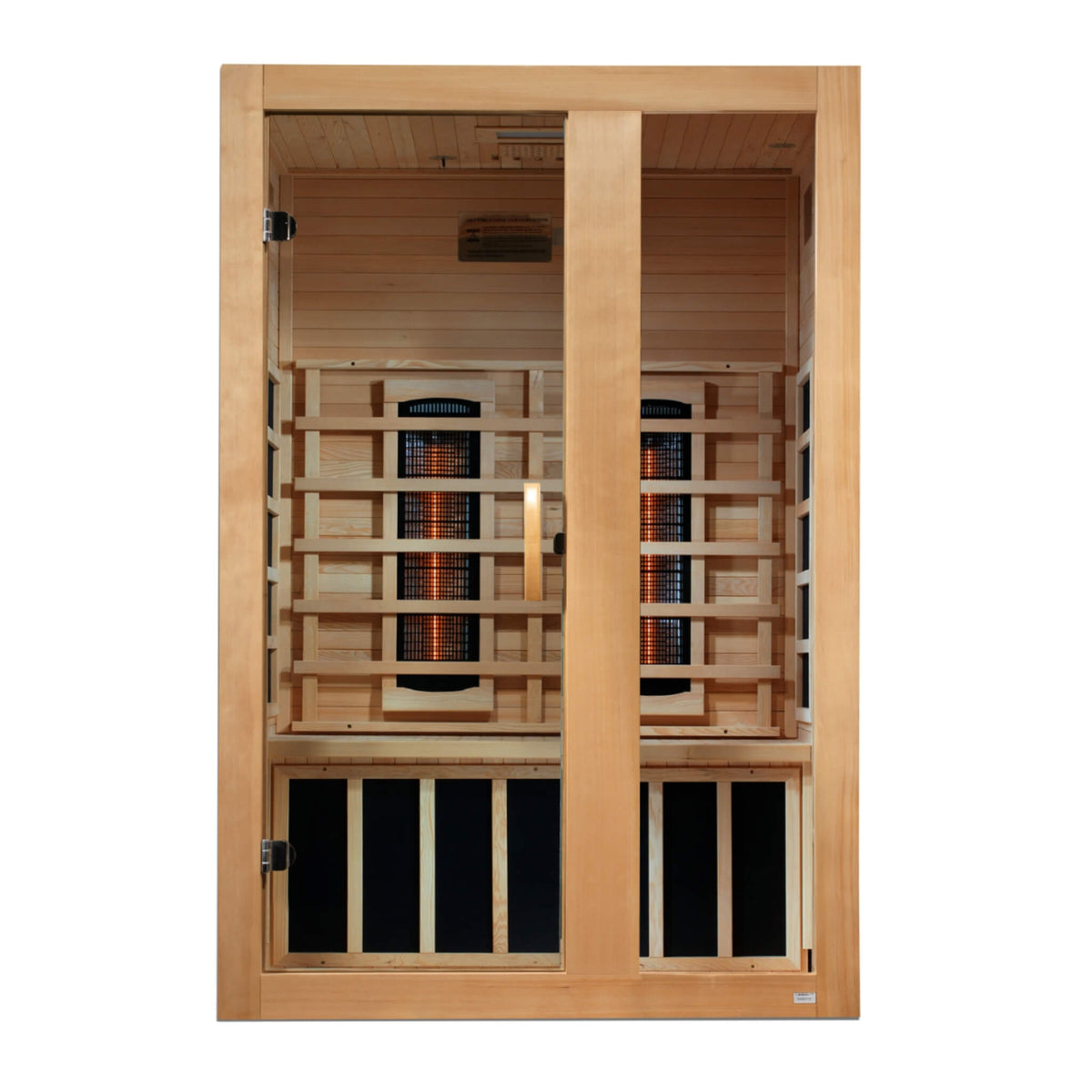
Full Spectrum vs Far Infrared Sauna: What's the Real Difference? (2026)
Quick Reference Summary
A far infrared sauna uses only far infrared carbon heating panels. A full spectrum sauna adds near infrared heating elements alongside those same far infrared panels, so you get two wavelength types in one session instead of one. Full spectrum is sometimes marketed as covering near, mid, and far infrared together, but that is not a fixed standard, and it is worth checking exactly what wavelengths a specific model includes before assuming.
TL;DR
You keep seeing full spectrum vs far infrared sauna comparisons online, some framed as far infrared vs full spectrum sauna, others written as far infrared sauna vs full spectrum, with no consistent explanation of what actually separates the two. Here is the real difference, along with whether you need it, how it compares to a traditional sauna, and how EMF rating fits into the decision.
What Is the Difference Between Far Infrared and Full Spectrum Sauna
A far infrared sauna heats your body using only far infrared wavelengths, carbon panels positioned around the cabin that produce heat you feel as a steady, penetrating warmth. That is the entire heating system, one wavelength type doing the whole job.
A full spectrum sauna starts with those same far infrared carbon panels, then adds near infrared heating elements alongside them. That is the practical difference between full spectrum and far infrared sauna designs: full spectrum is an addition to far infrared, not a replacement for it. Framed as full spectrum sauna vs far infrared, or full spectrum infrared sauna vs far infrared, the answer is the same either way, one wavelength type versus two working together.
Some people ask this as infrared vs full spectrum sauna, or far vs full spectrum infrared sauna, as if choosing between two unrelated categories. They are not unrelated. Every full spectrum sauna in our lineup is a far infrared sauna first, with near infrared added on top, so full spectrum vs infrared sauna is really a question of how many wavelength types a specific far infrared model includes, not a choice between two separate kinds of sauna.
Here is the part worth knowing before you shop, whether you are comparing full spectrum infrared sauna vs far infrared sauna or full spectrum sauna vs infrared sauna listings: "full spectrum" does not have one fixed, industry-wide definition. Some manufacturers use the term to mean near, mid, and far infrared combined. Others, including the full spectrum models in our own lineup, use it to mean far infrared carbon panels plus near infrared elements specifically, without a separate mid infrared component. Neither approach is wrong, but the term alone does not tell you which wavelengths a specific sauna actually includes. Always check the individual product's own specifications rather than assuming from the name.
Occasionally the comparison gets framed as full spectrum sauna vs near infrared alone, as though near infrared is the whole story. It is not. In every model we carry, near infrared elements are added alongside far infrared carbon panels, never sold as a standalone heating system on their own.
Far Infrared vs Full Spectrum Sauna Comparison
Put side by side, the infrared sauna full spectrum vs far infrared comparison comes down to heater count and wavelength mix, not a difference in overall build quality. A far infrared model uses only far infrared carbon panels. A full spectrum model uses those same panels plus additional near infrared elements. Written out as full spectrum vs far infrared sauna differences, or full spectrum versus far infrared sauna, it is the same underlying comparison stated a few different ways: how many wavelength types does the session actually include.
When people ask what is better full spectrum or far infrared sauna, there is no universal answer, since it depends on whether you want that second wavelength type included. The difference between full spectrum and far infrared sauna models, or the difference between full spectrum and infrared sauna models more broadly, is additive, not a tradeoff where one gives something up for the other.
Full Spectrum vs Far Infrared Sauna Benefits
Framed around full spectrum vs far infrared sauna benefits specifically, a far infrared session gives you the core benefits most people associate with infrared sauna use, warmth, sweating, and relaxation, from one wavelength type. A full spectrum session gives you that same experience plus a second wavelength type working alongside it. Whether the added near infrared element changes the session meaningfully for you is a matter of personal preference, not a documented difference in outcome, since most sauna research to date has studied far infrared or traditional heat on its own rather than combined full spectrum systems specifically.
Do You Need a Full Spectrum Infrared Sauna
Most of what a sauna session offers comes from far infrared alone, and a far infrared sauna delivers that on its own without needing anything added. Full spectrum brings a second wavelength type into the same session, which some users prefer simply for variety. If you are weighing far infrared or full spectrum sauna as options, the decision comes down to whether that additional wavelength type matters to you, not whether one is a better sauna overall.
Low EMF and Full Spectrum Are Two Separate Specifications
EMF rating and wavelength mix are two different specifications, and one does not determine the other. A sauna can be Low EMF, Ultra Low EMF, or Near Zero EMF regardless of whether it is far infrared only or full spectrum, since the EMF rating describes the panel's electromagnetic field output, while full spectrum describes which wavelength types are included. So a comparison like low emf infrared sauna vs full spectrum, or low emf far infrared sauna vs full spectrum, is not really an either-or choice, a sauna can be both, one, or neither, and only that specific model's own product page tells you which. Never assume a Low EMF listing is automatically far infrared only, or that a full spectrum listing is automatically a higher EMF tier. Check both specifications separately on the product page before you decide.
Full Spectrum Infrared Sauna vs Traditional Sauna
A traditional sauna heats the air around you, often well above 150°F, using a wood, electric, or hybrid stove like a Harvia heater. A full spectrum infrared sauna heats your body more directly through radiant infrared wavelengths at a lower ambient temperature, typically 118 to 132°F. They are genuinely different experiences, not just different temperatures, and some sauna owners want both options in one cabin rather than choosing permanently between them.
Options in Our Full Spectrum Lineup
Full spectrum is available across several capacities in our Dynamic lineup, each pairing far infrared carbon panels with near infrared elements: the Dynamic Gracia 1-2-Person Full Spectrum Near Zero EMF FAR Infrared Sauna (DYN-6119-03 FS) for a compact footprint, the Dynamic Cordoba 2 Person Full Spectrum Infrared Sauna | DYN-6203-02 FS, Dynamic Santiago 2 Person Full Spectrum Infrared Sauna (DYN-6209-03 FS), and Dynamic Serena 2 Person Full Spectrum Infrared Sauna (DYN-6229-03 FS) for two-person use, and the Dynamic Lugano 3 Person Full Spectrum Infrared Sauna (DYN-6336-03 FS) for three.
If you specifically want the option to switch to a traditional stove as well, the Golden Designs Toledo 6 Person Hybrid Sauna | Full Spectrum and Harvia Traditional Stove (GDI-8360-01) combines full spectrum infrared with a genuine Harvia traditional stove in one cabin, switchable between the two.
Full specifications for each model, including exact heater counts, EMF ratings, and dimensions, are on their individual product pages.
Frequently Asked Questions
Is a full spectrum sauna better than a far infrared sauna?
Not objectively. Full spectrum adds near infrared elements alongside the same far infrared carbon panels a far infrared sauna already uses, giving you an additional wavelength type in the session. Whether that is worth it comes down to personal preference, not one being better than the other.
Is full spectrum infrared sauna worth it?
It depends on whether you want a second infrared wavelength type included in your sessions. Full spectrum does not replace far infrared, it adds to it, so it is worth it if that additional wavelength type matters to you rather than something everyone needs.
Do you need full spectrum infrared sauna?
No, not necessarily. Far infrared alone delivers the core sauna experience, warmth, sweating, and relaxation. Full spectrum is an addition some people prefer, not something a sauna session requires to work.
What does full spectrum mean in infrared sauna?
It means the sauna includes more than one infrared wavelength type. In our lineup, that means far infrared carbon panels plus near infrared elements. Other manufacturers may define full spectrum to include mid infrared as well, so it is worth checking a specific model's own specifications rather than assuming from the name.
Are all infrared saunas full spectrum?
No. A far infrared sauna uses only far infrared carbon panels. Full spectrum saunas specifically add near infrared elements, or in some cases mid infrared as well, alongside far infrared.
Full spectrum infrared sauna vs traditional sauna, what's the difference?
A traditional sauna heats the air to a high temperature using a stove. A full spectrum infrared sauna heats your body more directly through infrared wavelengths at a lower ambient temperature. Some saunas, like the Golden Designs Toledo, offer both options in one cabin.
Low EMF vs full spectrum infrared sauna, how do they relate?
They describe two different things. Low EMF refers to the electromagnetic field rating of the heating panels. Full spectrum refers to which infrared wavelength types the sauna includes. A sauna can be Low EMF, Ultra Low EMF, or Near Zero EMF and still be either far infrared only or full spectrum, so check both specifications separately on the product page rather than assuming one implies the other.
Ready to Choose?
If you want the core sauna experience without added complexity, a far infrared model is a straightforward starting point. If you want an additional wavelength type in the mix, our full spectrum lineup covers 1 to 3 person capacities. If you want the option to switch to a traditional stove entirely, the Toledo Hybrid gives you both in one sauna.
Any questions before you decide, we are here.
This content is for informational purposes only. Most sauna research has focused on far infrared or traditional heat specifically, and research on combined full spectrum systems is still emerging. Individual results and preferences vary. Consult a healthcare provider before use if you are pregnant, have a medical condition, or are taking medication.